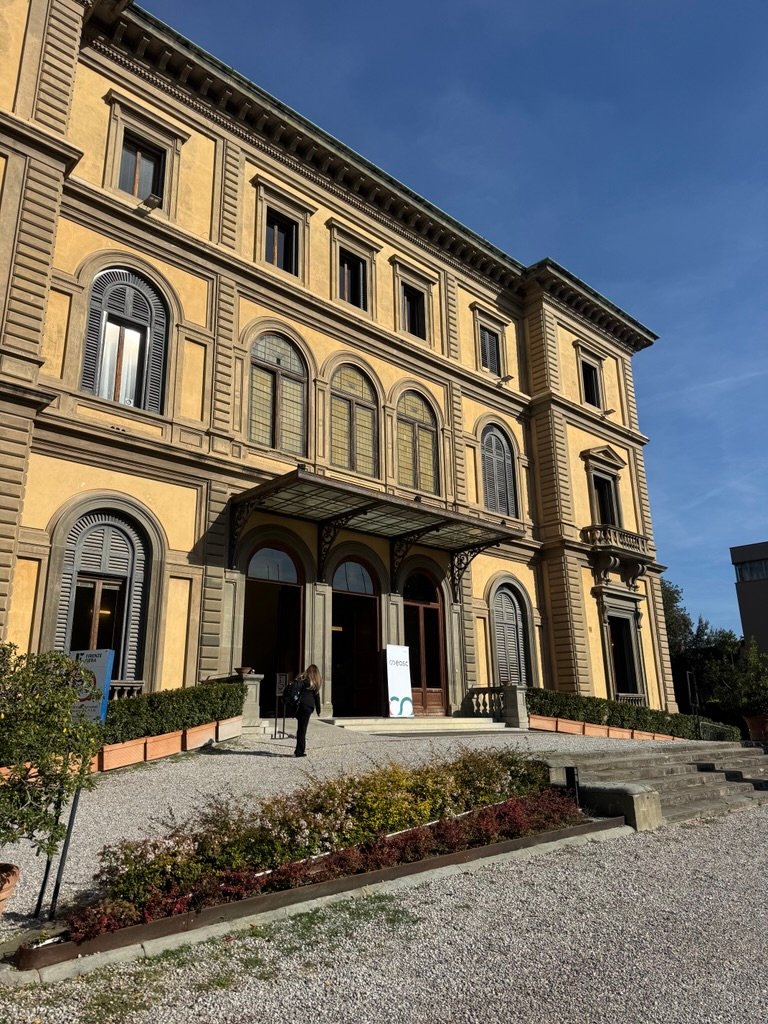
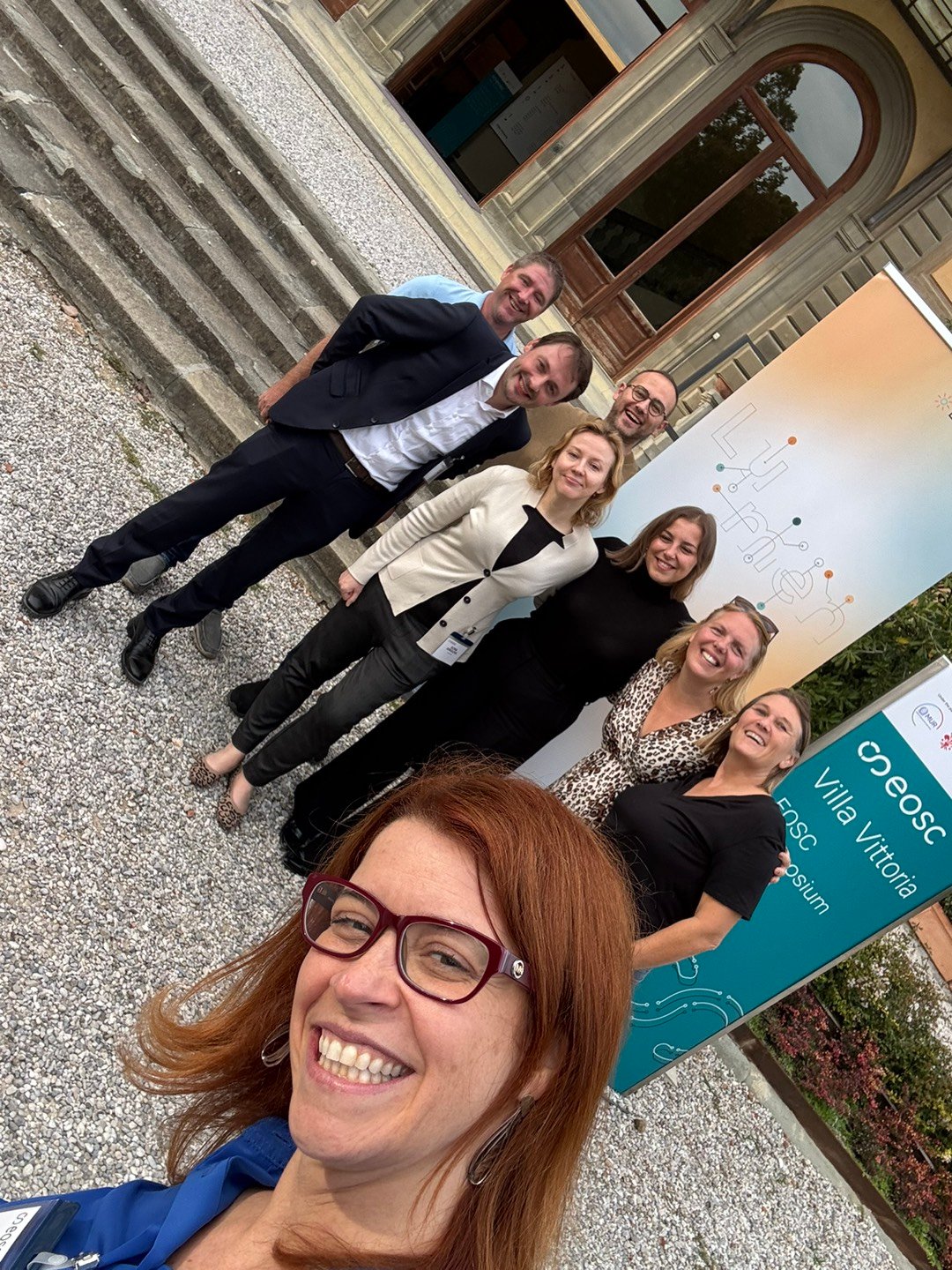
As the EOSC Federation officially moved into operations, the European research data community gathered in Florence from 14 to 16 October for the EOSC Symposium 2026. More than 500 participants from 35 countries came together for three days of exchange on the future of EOSC.
One of the challenges the EOSC community faces is how to improve access to research data, a growing need across all disciplines. On the one hand, research outputs are scattered across numerous sources. On the other hand, the tools used to find them are often “one-size-fits-all,” even though every scientific community has its own vocabulary, ontologies, and unique way of researching. The LUMEN project offers a concrete solution for this dilemma: the White-Label Platform (WLP) that allows research communities can build their own tailored discovery platform without having to createthe infrastructure from scratch.
Your community, your platform
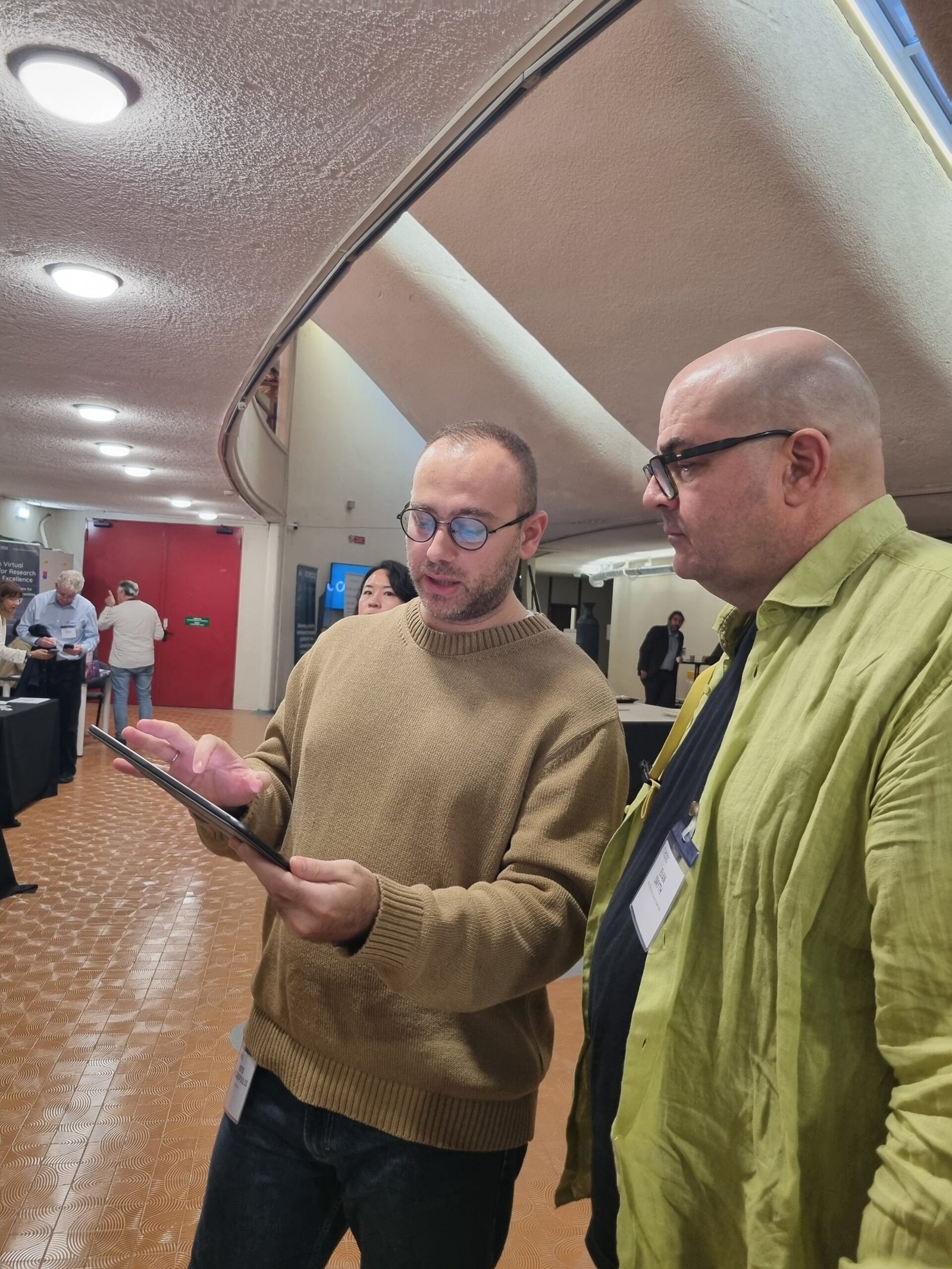
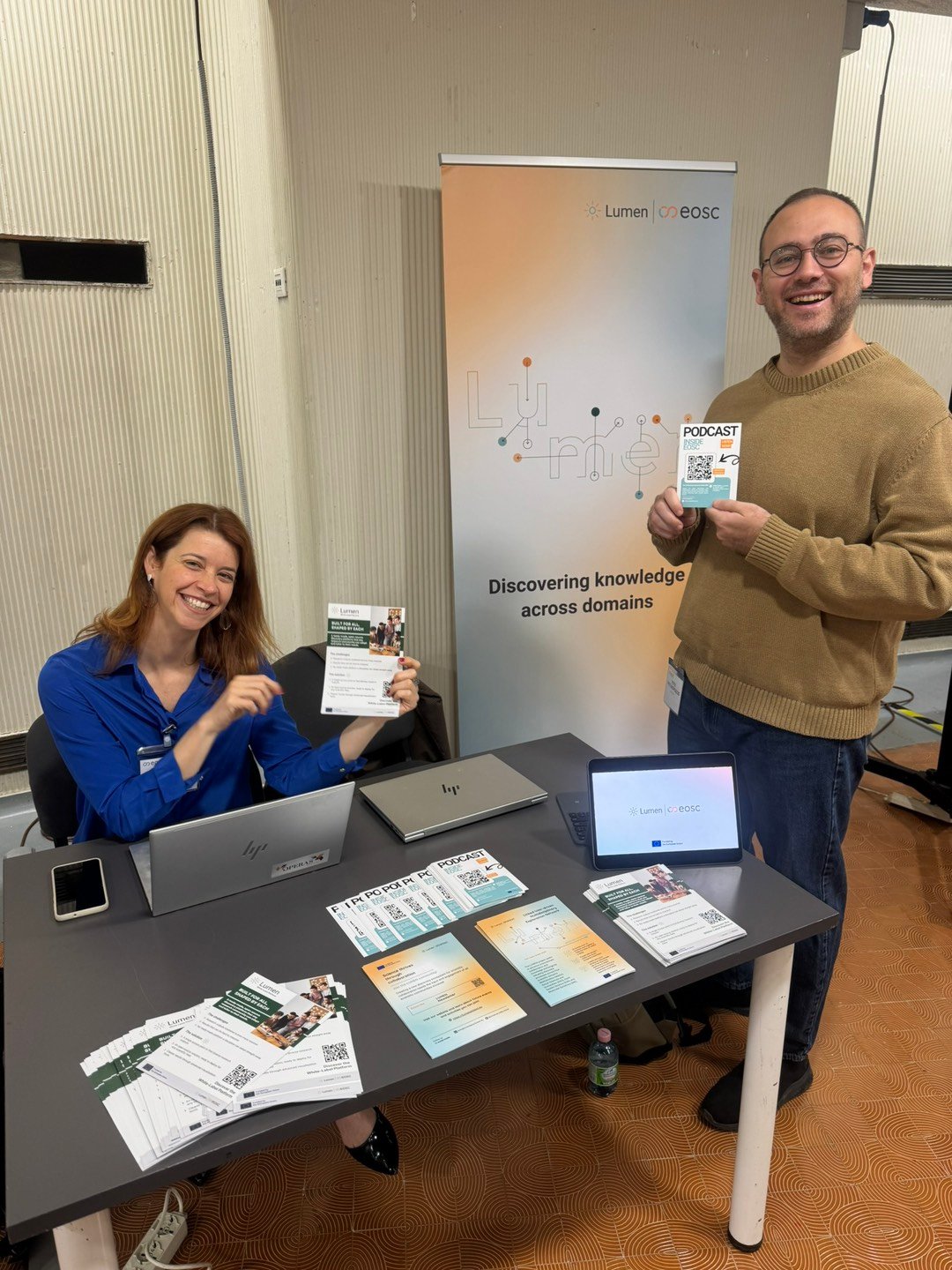
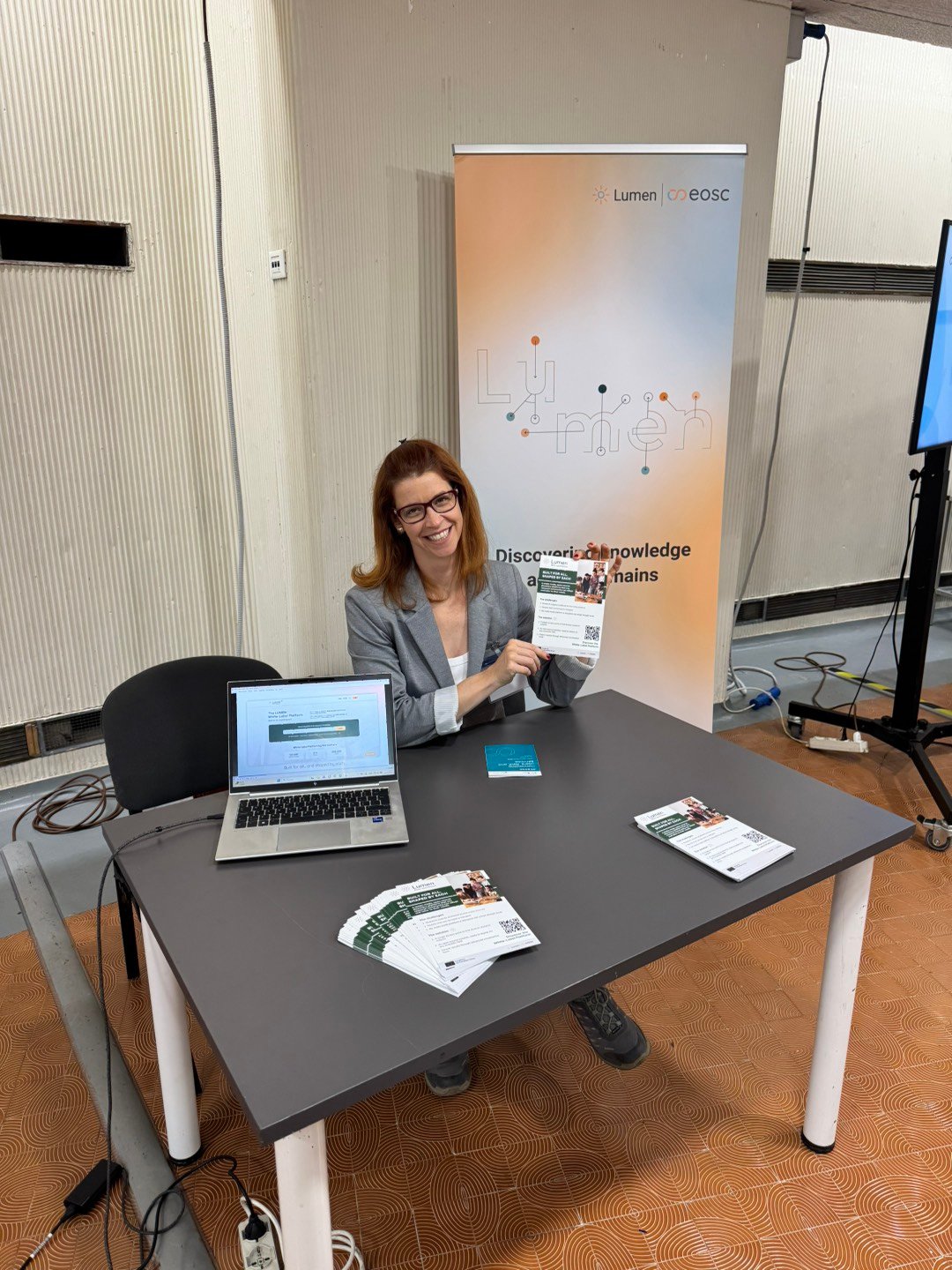
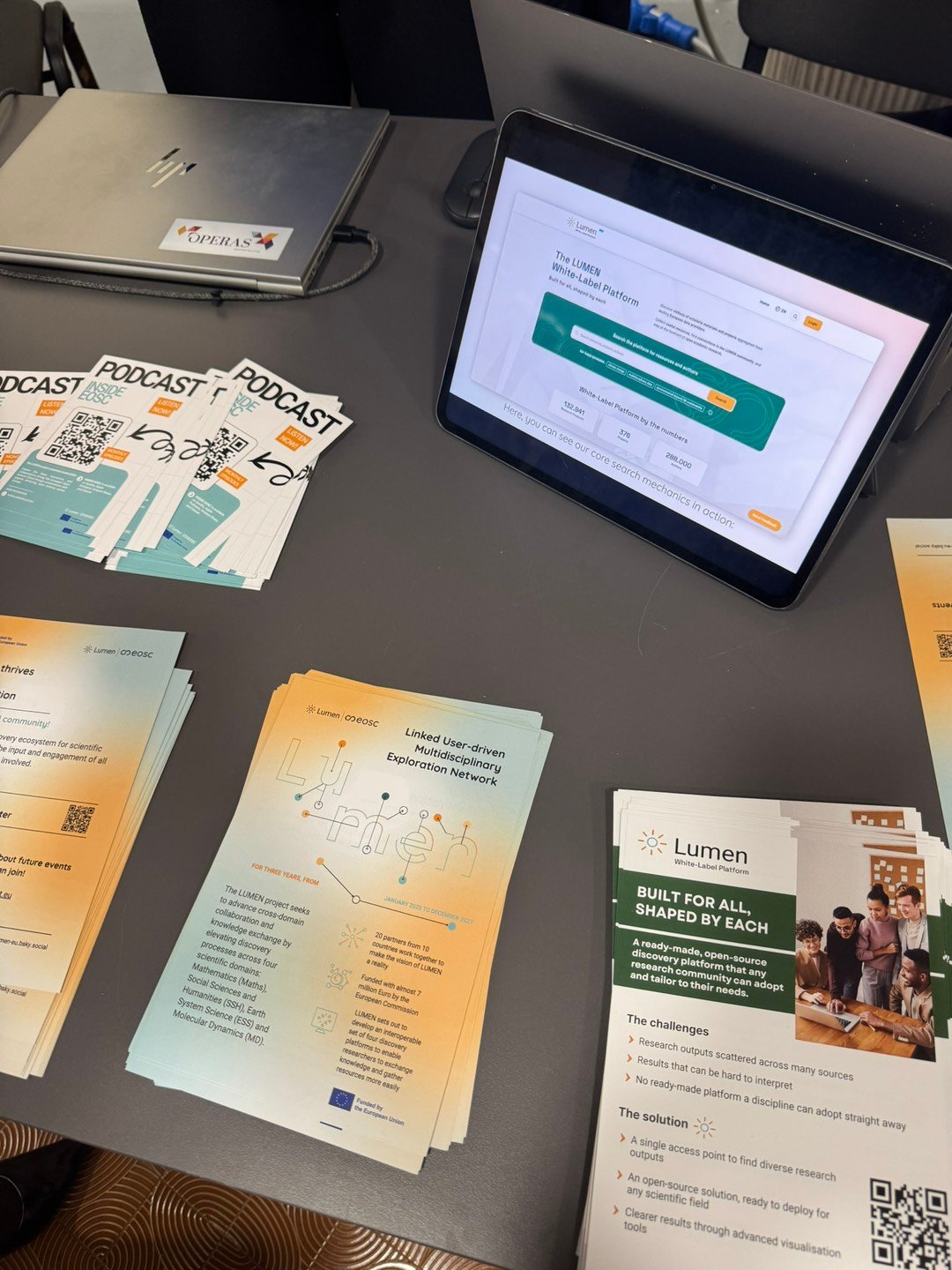
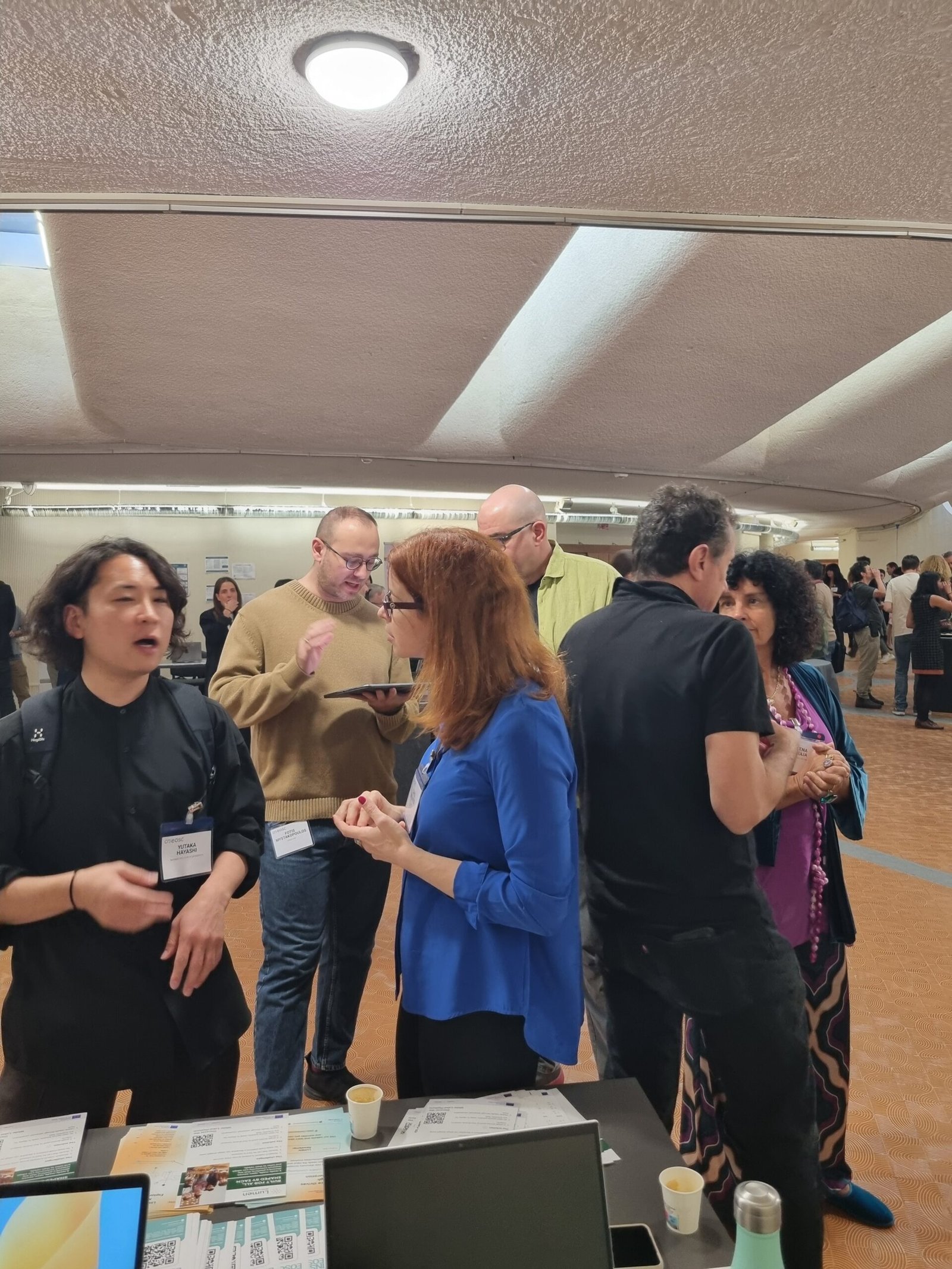
At the LUMEN booth in the EOSC Symposium, participants were able to talk to the team and better understand the advantages of this ready-made, open-source discovery platform that any research community can adopt and tailor to their needs. They also were able to watch the WLP video, where we explore the challenges of fragmented research data, walk through a live demo of the WLP, and break down how this shared solution strengthens the broader EOSC ecosystem. Within LUMEN, it is the basis for new discovery platforms for the Molecular Dynamics and Earth System Sciences communities.
Building blocks for the EOSC Federation
Beyond celebrating the Federation, the Symposium focused on making sure the EOSC Federation grows into a useful, sustainable and indispensable tool for researchers. LUMEN supports this goal, and the White-Label Platform is only one part of its wider contribution. Alongside it, LUMEN is developing other building blocks that strengthen EOSC as a whole: the LUMEN Data Mesh framework that puts the EOSC interoperability framework into practice while each community keeps control of its own data; LUMIS, a platform to create, manage and reuse ontologies and vocabularies; and tools such as the cross-domain Meta-Search , which LUMEN’s policy brief identifies as an opportunity to complement and extend the current EOSC service portfolio.
“With the Federation of Platforms, we make research discoverable across disciplines, from Earth System Sciences to the Humanities, while each community keeps control of its own data. It shows how a community-level federation can plug into the EOSC Federation” says Julien Homo, technical coordinator of LUMEN.
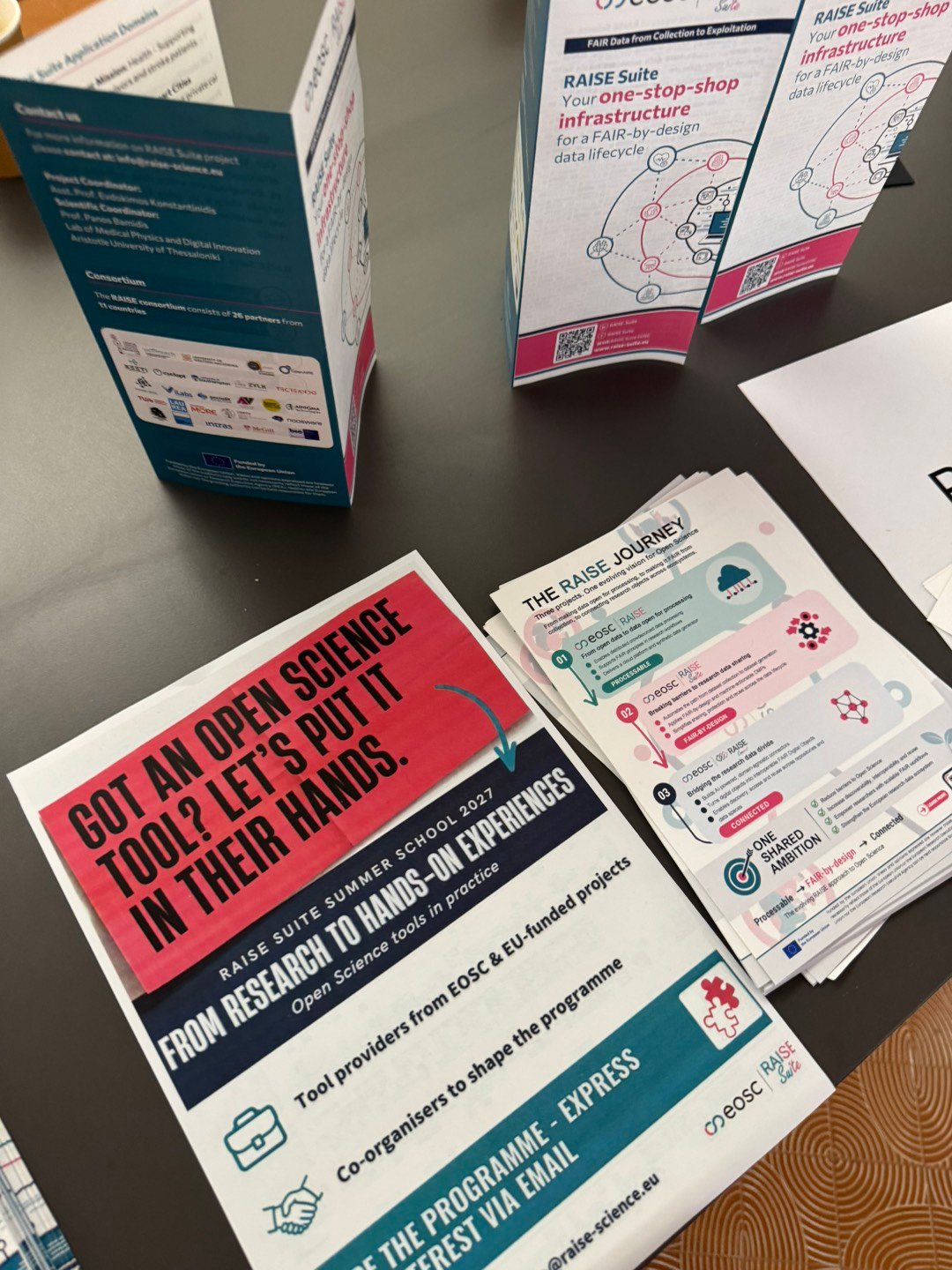
For the LUMEN team, the Symposium was also an opportunity to network and strengthen ties across the EOSC community. Sister projects RAISE Suite, EOSC Data Commons and DataGEMS were on site, as was EVERSE, with whom LUMEN signed a Memorandum of Understanding. Just as LUMEN connects communities through its Federation of Platforms, these partnerships connect projects, helping to build a more coherent EOSC.
“The atmosphere in Florence was really energising. Now that the Federation is in production, you could feel that people are no longer just talking about EOSC, they are building it together. Our booth became a meeting point where conversations quickly turned into concrete ideas for collaboration.” says Suzanne Dumouchel, scientific coordinator of LUMEN.
Missed LUMEN in Florence? Discover the White-Label Platform for yourself:
- Watch the WLP video for a live demo and a look at how the platform works.
- Explore the White-Label Platform
- Get in touch at info@lumenproject.eu if your research community is interested in setting up its own platform
- To learn more about LUMEN’s contributions to EOSC and policy recommendations, read the LUMEN policy brief.